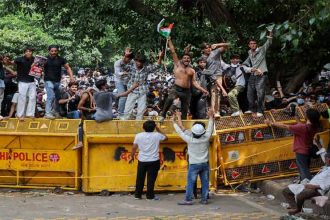
India is witnessing a wave of public discontent that extends far beyond the controversy surrounding examination paper leaks. Over the past month, Delhi has emerged as the epicentre of protests, with thousands of students and young people taking to the streets to demand accountability and the resignation of the Union education minister.
The demonstrations gathered momentum following the hunger strike of educationist and activist Sonam Wangchuk, while youth organisations and student groups expanded the movement into one of the most significant public mobilisations seen in recent years. The immediate trigger was the series of alleged examination paper leaks that disrupted the futures of nearly two million students, with reports linking the crisis to several student suicides. For many young Indians, the issue represents not just administrative failure but the collapse of faith in one of the country’s most important institutions—the education system.
As the protests intensified, the government’s response further escalated tensions. Police attempted to disperse demonstrators using batons, tear gas and water cannons, leaving scores injured and prompting widespread criticism from civil society groups and opposition parties. The crackdown did not contain the movement; instead, demonstrations spread to several cities across the country. Political leaders, including Rahul Gandhi and members of the Opposition, joined protest actions and were briefly detained, transforming what began as a student movement into a broader political confrontation over governance and accountability.
The paper leak controversy has become symbolic of a larger crisis confronting India’s youth. Millions of students invest years preparing for highly competitive examinations that determine access to higher education and public-sector employment. When these examinations are compromised, the consequences extend beyond academic disappointment. Aspirations built over years of hard work are undermined, public confidence erodes, and anxiety about the future deepens. The anger expressed on the streets reflects a growing belief that institutional failures are becoming increasingly common while accountability remains elusive.
For more than a decade, political discourse in India has often been dominated by ideological debates, identity politics and religious polarisation. Critics argue that these issues have frequently overshadowed concerns relating to employment, education, healthcare and economic opportunity. Previous movements—including the farmers’ protests, the demonstrations by women wrestlers demanding action over allegations of sexual harassment, and the Shaheen Bagh protests against the Citizenship Amendment Act—were also met with firm state action. These episodes have reinforced perceptions among many sections of society that dissent is increasingly viewed through the lens of law and order rather than democratic engagement.
What distinguishes the current movement is the breadth of public frustration it reflects. The examination scandal has become a focal point for wider grievances relating to unemployment, inflation, declining opportunities for young people and diminishing trust in public institutions. For many protesters, the demand for accountability over paper leaks is inseparable from broader concerns about governance and transparency. The government’s subsequent assurances of educational reforms have been interpreted by supporters as a commitment to corrective action, while critics view them as a response to mounting public pressure.
The protests also underscore the resilience of democratic participation in India. Despite police action and political confrontation, thousands have continued to demonstrate peacefully, highlighting the enduring importance of public mobilisation in a democratic society. Whether the movement ultimately leads to substantive institutional reforms remains uncertain, but it has already exposed the depth of public dissatisfaction among a generation anxious about its future. The education crisis has evolved into a broader debate about accountability, governance and the state’s responsibility to protect the aspirations of millions of young Indians.
Shafaqna Pakistan
pakistan.shafaqna.com
Note: Shafaqna do not endorse the views expressed in the article