Last week, Hamas announced the dissolution of the governing body that had administered the Gaza Strip for nearly two decades, paving the way for a technocratic administration to assume responsibility for the territory. Under normal circumstances, such a political development would have dominated regional headlines, representing a significant shift in Palestinian governance. Instead, it has largely been overshadowed by wider geopolitical developments, including escalating tensions around the Strait of Hormuz and their implications for global energy markets. For Palestinians, whose humanitarian crisis continues to deepen, the transition has attracted relatively limited international attention despite its potential long-term significance.
According to Hamas officials, the head of the government’s emergency committee decided to dissolve the existing administrative structure to facilitate the transfer of authority to the National Committee for the Administration of Gaza (NCAG). The committee, based in Cairo, was reportedly established as part of diplomatic efforts associated with the ceasefire framework brokered by the United States last year. Supporters of the move view it as an attempt to create a more technocratic and broadly acceptable governing mechanism that could oversee reconstruction and civil administration while reducing political obstacles to future negotiations.
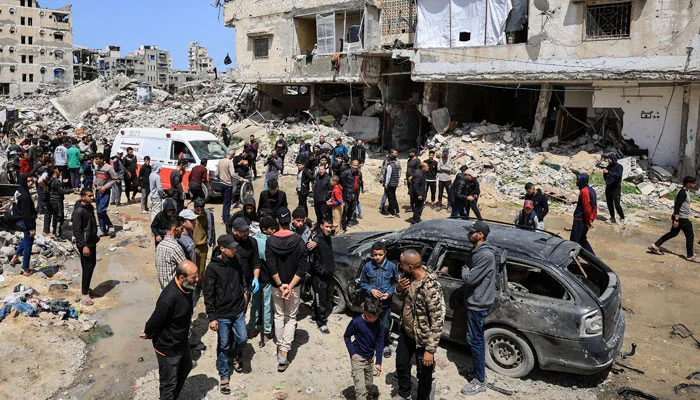
Yet the political transition is unfolding against the backdrop of continuing violence. Although a ceasefire formally remains in place, hostilities have persisted, with repeated reports of military operations, airstrikes and civilian casualties. Numerous humanitarian organisations have warned that conditions inside Gaza continue to deteriorate, with widespread displacement, shortages of food and medical supplies, and extensive destruction of civilian infrastructure. Critics argue that describing the situation as a functioning ceasefire fails to capture the reality experienced by civilians on the ground.
The human cost continues to mount. Recent Israeli strikes reportedly killed several Palestinians, including a nine-year-old girl who was said to have died after gunfire struck a tent encampment sheltering displaced families. Incidents such as these have fuelled growing international concern over the protection of civilians during the conflict. An independent United Nations commission has accused Israeli authorities and security forces of committing serious violations of international law, including acts it says amount to war crimes and crimes against humanity. Israel has consistently rejected such allegations, arguing that its military operations are conducted in self-defence against Hamas and that it seeks to minimise civilian casualties while targeting militant infrastructure.
Against this backdrop, Hamas has presented the dissolution of its governing body as a political gesture intended to remove obstacles to negotiations and the future administration of Gaza. Hamas officials have argued that the move demonstrates a willingness to facilitate broader political arrangements, even as discussions surrounding the group’s future role and the question of disarmament remain unresolved. The issue of whether Hamas should relinquish its weapons continues to divide regional and international actors, with many governments insisting that disarmament is essential for any lasting political settlement, while others contend that the broader context of occupation and Palestinian self-determination cannot be separated from that debate.
Meanwhile, developments in the occupied West Bank continue to illustrate the volatility of the wider conflict. US Congressman Ro Khanna recently said he and other Americans were briefly detained by armed Israeli settlers during a visit to the occupied territory. The incident drew attention to growing concerns over settler violence and the broader security environment in the West Bank, issues that have increasingly attracted criticism from international observers as well as some Western lawmakers.
Ultimately, the question of who governs Gaza is only one part of a much larger and more complex conflict. Administrative restructuring may improve governance or facilitate humanitarian assistance, but it cannot by itself resolve the underlying political disputes that have fuelled decades of violence. Without a durable ceasefire, meaningful negotiations, guarantees for civilian protection, and a comprehensive political settlement addressing the aspirations and security concerns of both Palestinians and Israelis, the prospects for lasting peace will remain uncertain. Any sustainable solution will require more than a change in governance—it will demand the political will to address the root causes of one of the world’s longest-running conflicts.
Shafaqna Pakistan
pakistan.shafaqna.com
Note:Shafaqna do not endorse the views exrepssed in the article