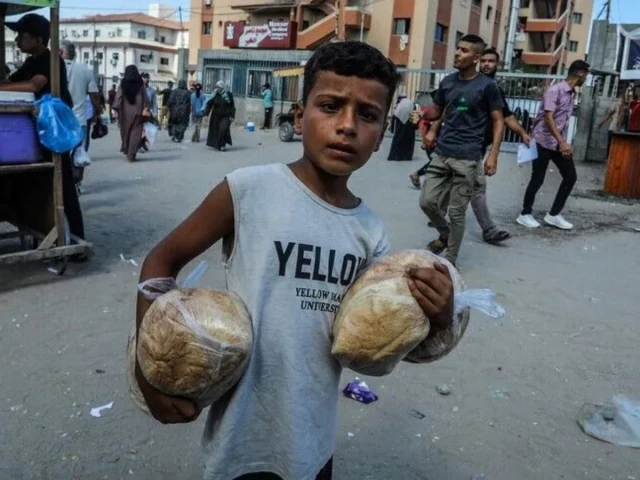
Shafaqna Pakistan: Around 1.4 million Palestinians in Gaza are experiencing acute food insecurity, while shortages of essential medicines in the war-ravaged territory have reached 47%, Palestinian officials warned on Monday.
Palestinian Minister of Social Development Samah Hamad said that 74,200 children require urgent treatment for acute malnutrition.
Hamad presented the findings of the Integrated Food Security Phase Classification (IPC) report during a joint news conference with UN humanitarian officials in the West Bank city of Ramallah.
She stressed that the report’s indication of a relative improvement in conditions should not be interpreted as an end to Gaza’s humanitarian crisis, but rather as the result of the continued flow of humanitarian assistance into the enclave.
Hamad warned that any decline in aid access would return conditions to more dangerous levels.
“Palestinians in Gaza are not facing a temporary food shortage, but a systematic Israeli policy targeting the foundations of life through the blockade and restrictions on the entry of food, water and medicine,” she added.
The report showed that more than 212,000 people face a food emergency, while 24,600 pregnant and breastfeeding women need urgent nutritional interventions, Hamad said.
She stressed that the figures reflect the continued fragility of the humanitarian situation in Gaza despite limited improvement.
Conditional improvement
Ramesh Rajasingham, deputy emergency relief coordinator for the Middle East peace process and UN resident and humanitarian coordinator in the occupied Palestinian territory, said the report’s findings should be read in a balanced way.
The improvement was achieved only “because of continued humanitarian aid delivery,” not because conditions had recovered or basic means of life had been restored, he said.
Around 67% of Gaza’s population, nearly 1.4 million people, still live in IPC Phase 3 or above, while more than 200,000 face Phase 4, or emergency levels of food insecurity, he added.
Continued humanitarian aid is “essential” to preserve this limited improvement, Rajasingham said.
He called for crossings to be opened fully and sustainably, economic and commercial activity to resume, people to regain sources of income and early recovery programs to begin.
World Food Program (WFP) representative and country director in Palestine, Shaun Hughes, said the report is an independent technical assessment prepared by more than 60 experts from over 20 institutions and based on the largest nutrition survey conducted in Gaza since the start of the Israeli war.
The relative improvement in indicators “should not be interpreted as the end of the crisis, but as a direct result of continued relief operations,” he said.
The WFP has reached around 75% of Gaza’s population each month since November through food assistance and cash transfers, Hughes said.
He warned that any decline in funding or aid volumes would lead to a rapid deterioration in food security indicators.
Medicine shortages
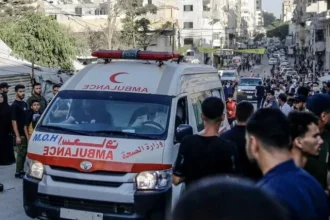
Separately, Gaza’s Health Ministry said the medicine shortage had reached 47%, while shortages in medical consumables reached 58% and shortages in laboratory testing materials rose to 85%.
The ministry warned that the shortages threaten a near-total halt of key diagnostic and life-saving treatment services.
Source: Express Tribune