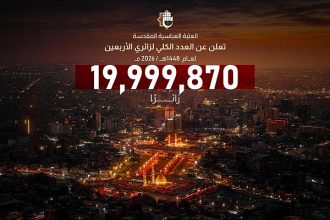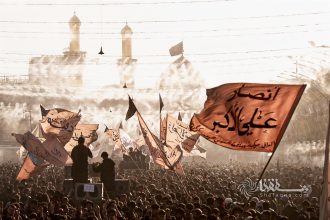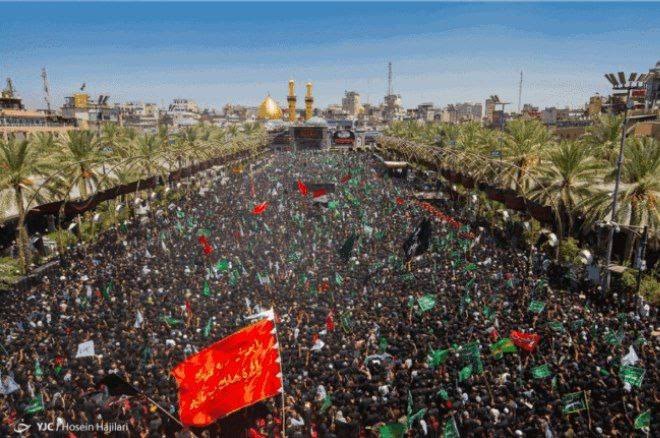
Shafaqna English | by Leila Yazdani*: This year’s Arbaeen pilgrimage, which attracted millions of Muslim pilgrims globally to Karbala, had a notably different tone. It occurred amid a war launched by a US-Israeli attack on Iran on February 28, which has not left Iraq unscathed in recent days.
In the international order post-US-Israeli war on Iran, Arbaeen stands as an international institution with relatively stable norms and functions that influence regional and global actors. This event reinforces a transnational religious identity, offers a model of decentralized crisis governance, creates imperatives for international cooperation, and influences the regional and global distribution of power and alters geopolitical calculations.
The most significant geopolitical achievements of the Arbaeen March are as follows:
1- Sense of belonging to a transnational community is the geopolitical identity of Arbaeen: The concept of geopolitical identity refers to the regional system to which a country, group, or society belongs. Defining geopolitical identity is a significant issue in international politics, and it is used to maintain the power and legitimacy of a country, nations, groups, and societies among other nations. Furthermore, geopolitical identity plays a crucial role in shaping strategies and geopolitical relations.
The widespread and organized participation of Shia Muslims from all over the world in the Arbaeen March strengthens a deep sense of belonging to a transnational community with shared ideals, values, and identity.
Cultivating trust, self-belief, courage, and boldness in the face of oppressive powers—through adherence to the school of Imam Hussain (AS)—not only enhances the collective identity and human dignity of the Islamic ummah but also consolidates a discourse of strength and resilience within its belief system.
This unique solidarity creates immense social capital that dramatically increases the capacity for cohesive and purposeful collective action by Shia communities on the international stage.
2- Arbaeen’s geopolitical weight transformed Muslim nations from a marginal position into central players: Geopolitical weight refers to the influence of positive and negative forces and factors that affect a country’s national power, such as its geographic location, relative territorial position, territorial size in proportion to population, skilled human resources, and natural and strategic resources. Therefore, geopolitical weight represents a country’s national power, credibility, and status on the regional and international stage, with the behavior of other countries, states, and political actors shaped based on it.
Arbaeen’s most notable geopolitical achievement is elevating Muslim nations from marginal to central roles by capitalising on their strategic position.
The display of organizational strength, unity, discipline, and the large gathering of pilgrims enhances the political influence and stature of Shia communities both within their countries and on regional or international stages. This sizable, well-organised presence clearly reflects an important geopolitical fact. The capacity to mobilize such a large population signifies a profound level of social influence and organisational strength, which must be factored into future regional development considerations.
3- Establishing and maintaining security reflects the significant power of Islamic countries: Every gathering or assembly, in any location, requires security and stability. The participation of millions in the Arbaeen pilgrimage necessitates a high level of security across various dimensions and layers.
Despite security challenges arising from threats and attempts to instill fear along the pilgrimage routes this year, the vast Arbaeen community succeeded—through popular strength and broad-based cooperation—in establishing and maintaining security and stability. The establishment of such security, enabling a mass gathering of Muslims, not only reflects the significant power of the Islamic countries but also reveals the constructive and effective capacities within the Arbaeen society.
4- Arbaeen gathering possesses a high capacity to mobilize Islamic countries’ resources and capabilities in pursuit of their goals: An increase in the level of power and shifts in the regional balance of power belong to the influence and strategic depth of a unified and cohesive state or nation.
Arbaeen pilgrims are united by shared religious and cultural foundations based on Islam and the ideals of Imam Hussain (AS), playing an active role in shaping their own destiny; therefore, the geopolitical outcome of Arbaeen is that this gathering possesses a high capacity to mobilize Muslim resources and capabilities in pursuit of their goals.
5- Creation of deterrence and reduction of threats: The strategic influence and depth of Arbaeen’s outcomes become especially apparent after the US-Israeli war on Iran and other geopolitical developments in the region, where soft power is important, and it plays a key role in future development in West Asia. The presence of Arbaeen pilgrims penetrates the minds, thoughts, and hearts of the lovers of Imam Hussain (AS), extending beyond Islamic lands to non-Muslim countries as well.
The most significant outcome of this strategic penetration and the geography of Arbaeen’s soft power is the creation of deterrence, the reduction of threats, and the establishment of lasting security within the Islamic COUNTRIES. The effects and outcomes of Arbaeen’s soft power for the Islamic ummah can be observed in both deterring enemy threats and enhancing the power and influence of Muslim countries.
6- Reducing geopolitical tensions: The spiritual atmosphere of Arbaeen provides a suitable platform for informal and unofficial contacts among representatives or influential figures from countries with long-standing disputes or current tensions. This role is of strategic importance, particularly in the complex context of West Asian regional relations, given recent developments.
7- Regional security cooperation and capacity building: The successful security management of this massive event requires and leads to closer, more intensive cooperation between the security and intelligence agencies of the pilgrims’ countries of origin (such as Iran, Pakistan, Azerbaijan, and Lebanon) and the Iraqi government and security forces.
This cooperation, which includes information exchange, border coordination, joint training, and synchronized patrols, provides a practical and valuable example of cooperation for mutual security and strengthens regional security capabilities. This cooperation model can become a template for managing other shared security challenges in the region.
8- Arbaeen March combats divisive discourses in the region: The active and strong presence of Sunnis, Christians, Yazidis, and other faiths in Iraq alongside Shias contributes significantly to interfaith rapprochement, promoting tolerance and peaceful coexistence. This practical cooperation exposes the contradictory nature of divisive discourses.
9- Arbaeen March is a leading model for international cooperation: The logistical, security, health, traffic, and service organization for a multinational and multi-million-person crowd in a country with infrastructural challenges like Iraq is an astonishing achievement and provides an unparalleled model of transnational management and participatory governance. The extensive role played by popular institutions (Mawkibs) and volunteer organizations alongside official bodies is a brilliant example of state-nation cooperation and multi-level governance that can be inspiring for the management of humanitarian crises or play a role in global and regional development.
In conclusion, the Arbaeen event shows that power is not limited to hard tools (military, economic) but that social organization, identity cohesion, and cultural-religious capital can be a strong source of influence and impact. This “networked power” model, as a geocultural and geopolitical phenomenon based on decentralized transnational communication, plays a key role in the international system.
The efforts of some rival governments and intellectual currents to marginalize the event are a constant challenge. The presentation of distorted narratives or the highlighting of peripheral incidents can affect its global image. It is necessary to convert the positive image created into tangible political capital, and opening more formal diplomatic channels with the West and other international actors requires smart and more active diplomatic strategies.
Sources: Jips.isca.ac.ir, WANA, Rjir.basu.ac.ir, Irthink
*Leila Yazdani is a PhD Candidate in International Relations.
Source: Shafaqna English