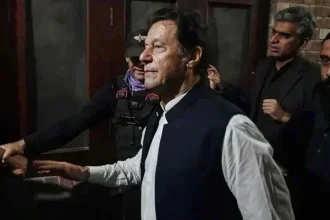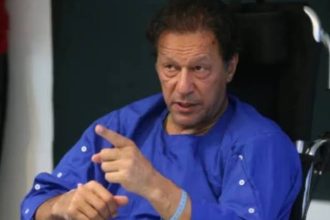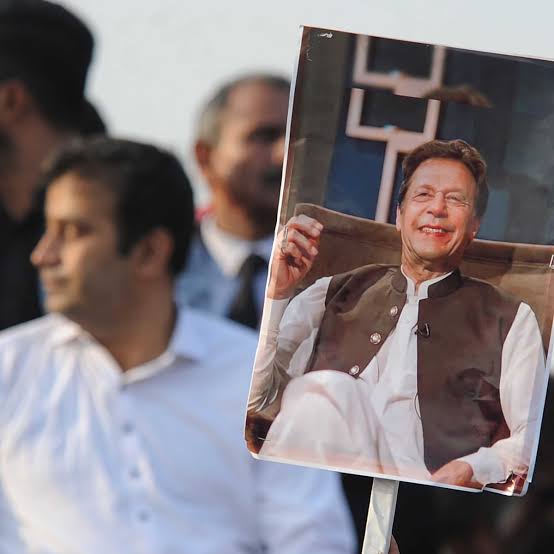
The Supreme Court’s intervention in the case of former prime minister Imran Khan has come as an important reminder that the state’s responsibility towards prisoners does not end once a person is placed behind bars. Acting on medical reports indicating a concerning deterioration in Mr Khan’s health, the court directed the relevant authorities to move him to Islamabad’s Shifa International Hospital for a comprehensive medical examination. The court further ordered that the examination be conducted under the supervision of one of his sisters and a personal physician, alongside other medical specialists. It also directed jail authorities to facilitate weekly meetings between Mr Khan and his family and allow him to speak to his sons by telephone.
The court’s observations are particularly significant because they underline a basic constitutional and humanitarian principle: the state remains responsible for protecting the life, health, dignity and security of people in its custody. Imprisonment is a deprivation of liberty; it should not become a justification for denying prisoners appropriate medical treatment, access to their families or the right to be treated with dignity.
Reports concerning Mr Khan’s health had been circulating for months, while his supporters repeatedly raised concerns about his access to medical care. His jail authorities, meanwhile, have maintained that there was no serious cause for alarm. The dispute over his health could have been avoided had the authorities adopted a more transparent and accommodating approach from the outset. When the health of a high-profile prisoner becomes a matter of public controversy, independent medical assessment is clearly preferable to a prolonged confrontation between the prisoner’s representatives and the state.
The matter also raises broader questions about the treatment of political prisoners in Pakistan. The country has a long and unfortunate history of governments using state institutions against political opponents. Leaders who once exercised considerable power have themselves experienced imprisonment, restrictions and, in some cases, serious difficulties in obtaining appropriate medical treatment. The lesson from this history should be obvious: political parties in power today may become the opposition tomorrow. Any government that permits the mistreatment of its rivals is ultimately weakening the protections that its own leaders may one day need.
It is therefore disappointing that successive governments have often failed to rise above political vendettas. The senior leadership of both the PML-N and PPP has, at different points in Pakistan’s political history, faced imprisonment and harsh treatment. Those who have experienced such circumstances themselves should understand better than most why the state must ensure humane treatment for political opponents. Extending basic rights to a political rival is not an act of political favour; it is an affirmation of the principles of justice and due process.
At the same time, the issue should not be viewed exclusively through the prism of Imran Khan’s political status. Several other political leaders remain behind bars, including women and elderly individuals, some of whom have reportedly faced health problems and the difficulties associated with advancing age. Their circumstances deserve equal attention. A fair system cannot selectively invoke humanitarian principles for one prisoner while ignoring another because of political affiliation.
The state must therefore establish a consistent standard for the treatment of all prisoners. Medical concerns should be assessed by qualified and independent doctors rather than political authorities or prison officials. Families should be allowed reasonable access to prisoners, particularly when health problems arise, and genuine medical recommendations should not be obstructed for political or administrative reasons. Such measures would not represent special treatment; they would simply ensure that prisoners receive the rights and dignity guaranteed to them under the law.
Ultimately, the treatment of prisoners is an important measure of the character of a state. Pakistan’s political history demonstrates the dangers of allowing political rivalry to influence the administration of justice. Governments and political parties should recognise that today’s political enemy can become tomorrow’s ally — or that today’s ruling party can itself become tomorrow’s opposition. The protection of basic human and legal rights must therefore be based on principle, not political convenience.
The Supreme Court’s intervention should serve as an opportunity to establish a broader and more durable standard. Mr Khan, like every other prisoner, is entitled to proper medical care, family contact and humane treatment. The same must be true for every political detainee, regardless of party, popularity or the allegations against them. In the end, safeguarding prisoners’ rights is not about defending an individual politician; it is about defending the rule of law itself.
Shafaqna Pakistan
pakistan.shafaqna.com
Note: Shafaqna do not endorse the views expressed in the article