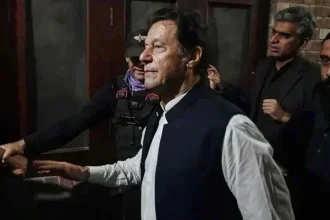
All the government had to do was comply with a straightforward directive: take a prisoner from jail to an appointed hospital and allow him to undergo medical examinations under the supervision of people he trusted. Such a step would have satisfied the Supreme Court’s order issued roughly 48 hours earlier and, at the same time, given the PML-N an opportunity to demonstrate restraint and goodwill.
Instead, the government chose confrontation. Despite explicit directions from the Supreme Court, it appeared determined to impose its own interpretation of the order. Implementation was delayed until the last possible moment, and when action was finally taken, it fell short of the spirit of the court’s directive. Yet the government maintained that it had fulfilled the order on a “technical” basis.
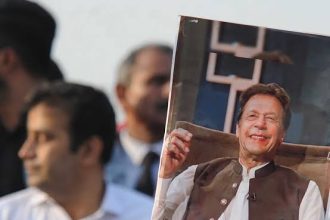
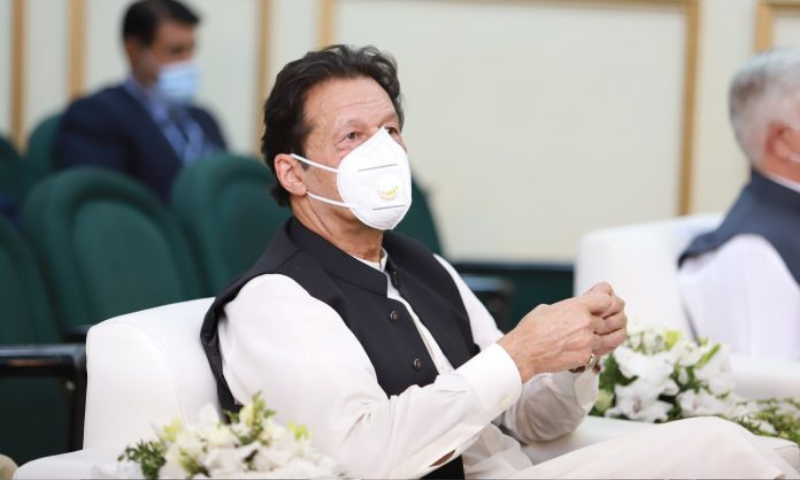
As the controversy unfolded across Pakistani news media on Friday, the government itself seemed to be reinforcing the very political reality it might prefer to avoid — that jailed former prime minister and PTI founder Imran Khan remains a highly consequential figure in the country’s political landscape. What could have been a routine matter concerning a prisoner’s medical examination was transformed into a high-stakes political confrontation.
This was hardly the first occasion on which the government has appeared to insist on its own interpretation of a court order despite clear instructions from the judiciary. Repeated confrontations of this nature risk creating the impression that judicial directives can be negotiated, reinterpreted or selectively implemented depending on political circumstances.
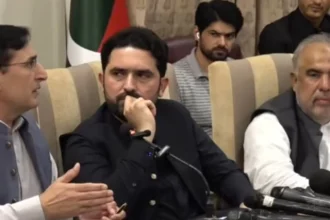
But the other side has also contributed to the problem. The Supreme Court had specifically warned against politicising Imran Khan’s health as a condition for allowing his family members or lawyers to meet him. Despite that restriction, his sister, Dr Uzma Khan, who met the PTI founder, held a public media briefing on Friday afternoon and spoke in detail about her interaction with him and the health concerns he had reportedly shared with her.
The court had warned that the relief granted to Imran Khan could be withdrawn if his family or legal representatives publicly discussed his health. Yet, apparently frustrated by what they perceived as another instance of a court order being disregarded, his family chose to speak publicly.
The result was deeply damaging to the institution itself. Both sides appeared to treat the Supreme Court’s directives as part of a broader political contest, leaving the judiciary looking increasingly powerless in the face of political confrontation.
The Government’s Political Calculations
The PML-N government appears determined to keep Imran Khan behind bars and away from the political spotlight. The strong reactions from government ministers and allied commentators to the Supreme Court’s intervention revealed a degree of political anxiety that was difficult to conceal.
Rather than treating the court’s order as a limited matter concerning access to medical care, the government’s response elevated it into another confrontation with the opposition and the judiciary. In doing so, it arguably gave Imran Khan renewed political visibility at a time when the government would presumably prefer to keep him out of the public conversation.
This comes at a particularly sensitive moment for the government. With speculation surrounding major legislative changes and a key coalition partner mobilising opposition forces to challenge the government’s legislative agenda and extract concessions, the PML-N has emerged from this episode looking politically weaker than it needed to.
A more measured response could have allowed the government to comply with the Supreme Court’s order without surrendering any meaningful political advantage. On the contrary, showing flexibility could have demonstrated confidence and political maturity.
An Opportunity for Reconciliation
The government can still change course. There is little justification for preventing prisoners from receiving medical treatment and examinations through facilities and doctors they trust, particularly when legitimate concerns exist about their health and wellbeing.
The issue becomes even more important when considering the wider concerns surrounding political prisoners, including women who have remained incarcerated for unprecedented lengths of time under the current government. At such a moment, the state has an opportunity to demonstrate that justice does not have to mean retribution.
Allowing prisoners reasonable access to medical facilities of their choice would not amount to political surrender. It would simply reaffirm a basic principle: that the state can enforce the law while still respecting human dignity and judicial authority.
Ultimately, the episode was not merely about one medical examination or one prisoner. It was a test of whether political power can coexist with judicial independence and basic humanitarian considerations. By turning a relatively simple matter into another political confrontation, both sides risked weakening the very institutions they claim to defend.
A little restraint, transparency and magnanimity could have prevented the crisis altogether. The government still has the opportunity to choose that path.
Shafaqna Pakistan
pakistan.shafaqna.com
Note: Shafaqna do not endorse the views expressed in the article